


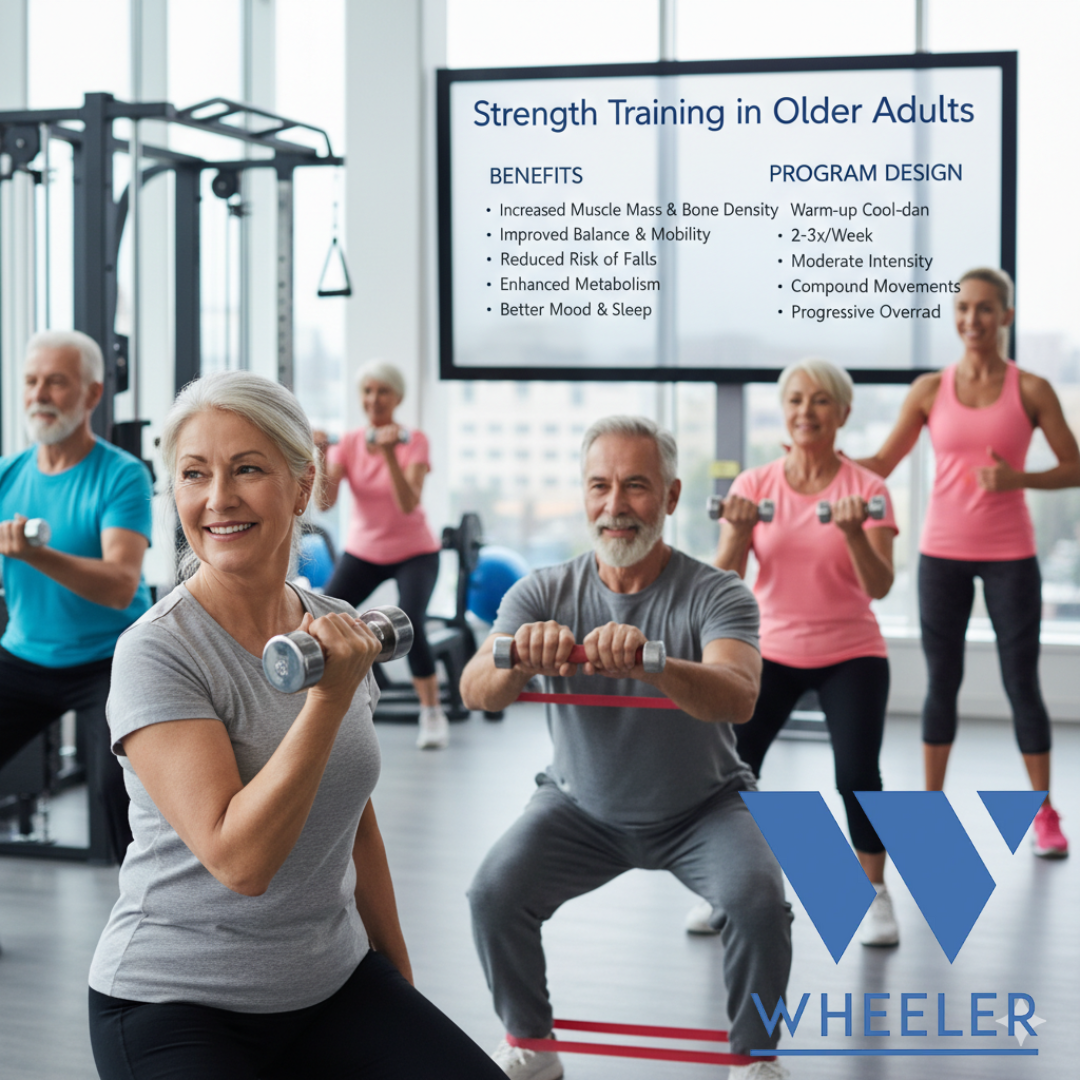
Strength Training in Older Adults: Benefits and Program Design
Aging brings multiple physiological changes: loss of muscle mass (sarcopenia), declines in strength (dynapenia), neuromuscular alterations, reduced functional capacity, and increased risk of falls, frailty, dependence, hospitalizations, and premature mortality. These losses are not wholly inevitable — strength (resistance) training has emerged as an effective intervention to slow, attenuate, and sometimes partially reverse these adverse adaptations.
Numerous studies and reviews show that older adults, even at advanced ages, can positively respond to resistance stimuli with gains in strength, power, muscle mass, and physical function. Additionally, when strength training is combined with other components (balance, functional training, endurance), its impact on quality of life and fall prevention is even greater.
This article explores the physiological basis, benefits, practical recommendations, and special considerations for designing strength training programs for older adults, ending with key recommendations for day-to-day application in your professional work.
Physiological Changes of Aging That Affect Training Response
To design effective and safe programs, it’s critical to understand how aging modifies adaptation to strength training.
Sarcopenia and Dynapenia
- Sarcopenia is the progressive loss of muscle mass with aging, accompanied by declines in muscle quality, infiltration of intramuscular fat, and reduction in Type II (fast-twitch) fibers.
- Dynapenia refers to the loss of strength that is not fully explained by a proportional loss in muscle mass — i.e. there is a neurological component involving motor unit activation, coordination, and recruitment.
- In general, loss of power (the ability to generate force quickly) tends to be more pronounced than pure strength loss, and power is more strongly linked to functional disability than mass alone.
Neuromuscular, Hormonal, and Metabolic Changes
- Reduced voluntary activation and coordination, increased neuromuscular fatigue, and loss or remodeling of motor units.
- Declines in anabolic hormones (testosterone, growth hormone, IGF-1) and reduced sensitivity to anabolic stimuli.
- Impaired protein synthesis (anabolic resistance): older adults often require greater stimulus (volume, frequency, nutritional support) to drive hypertrophy compared to younger individuals.
- Elevated low-grade systemic inflammation (“inflammaging”), increased oxidative stress, and multiple comorbidities (e.g. diabetes, cardiovascular disease) that interfere with recovery.
- Diminished physiological reserve, increased risk of injury or overuse, and greater interindividual variability in training response.
These factors imply that programs must favor gradual progression, high individualization, appropriate recovery, and careful load adjustments.
Benefits of Strength Training in Older Adults
Here’s a summary of the key benefits demonstrated in the literature:
- Increased Strength and Power
Even in advanced age, older individuals can increase strength and the capacity to generate power (especially when employing controlled rapid contractions). - Improved Body Composition
Resistance training may reduce fat mass, increase (or preserve) lean mass, and improve the muscle-to-fat ratio. - Enhanced Physical Functionality and Daily Living Tasks
Better performance in tasks such as rising from a chair, climbing stairs, walking, and negotiating slopes translates into greater independence and quality of life. - Fall and Frailty Prevention
Resistance training, especially when combined with balance and coordination exercises, reduces fall risk and improves postural stability and resilience against perturbations. - Metabolic and General Health Benefits
- Improved insulin sensitivity and glycemic control
- Favorable effects on lipid profiles
- Mechanical stimulus for bone health
- Reduced systemic inflammation
- Possible positive effects on mood and cognition (some studies find modest gains in cognitive function and mental state)
- Long-Term Maintenance of Strength
Some research indicates that strength training in later life can help preserve strength years afterward.
Moreover, well-designed programs can maintain beneficial effects even through short periods of training interruption (though losses begin to accumulate over longer inactivity). - Safety and Adaptability
When properly structured and supervised, strength training is safe for many older adults, even those with certain comorbidities (bearing in mind medical clearance and adaptations).
In sum: the benefits are not just physiological, but functional and qualitative, with direct impact on autonomy, health, and well-being.
Program Design Principles for Older Adults
To be effective and safe, programs for older adults should integrate the following design principles:
Individualization and Baseline Assessment
- Review medical history, comorbidities, pain, joint limitations, frailty, and functional capacity.
- Conduct initial strength and functional tests (e.g. sit-to-stand tests, lower-limb strength, grip strength, gait assessment).
- Identify relative contraindications (e.g. uncontrolled hypertension, severe osteoporosis, advanced osteoarthritis).
- Establish realistic, individual goals: improving function, preventing falls, preserving autonomy.
Progression and Periodization Principles
- Begin with moderate loads and increase gradually (e.g. 5–10 % increments when technique allows).
- Use load / volume / frequency variation and microcycles/rest weeks to manage fatigue and adaptation.
- Alternate higher load phases with recovery or deload phases.
- Vary exercises (within each session or across phases) to avoid plateaus and maintain neural and muscular stimulus.
Frequency, Volume, and Intensity
Evidence-based general guidelines:
- Frequency: 2 to 3 sessions per week for major muscle groups, with at least 48 hours between sessions for recovery.
- Volume: Begin with 1–2 sets per exercise, progressing to 2–3 sets. Use 2–4 exercises per major muscle group as capacity increases.
- Repetitions: 8–12 repetitions per set (moderate loads, ~60–80 % of 1RM). In early phases, higher repetition ranges may be used to emphasize motor learning.
- Intensity: Typically 60–85 % of 1RM or loads that correspond to a moderate-to-high effort (e.g. 6–8 RPE on a 10-point scale).
- Velocity: In some sessions, include controlled-velocity or moderate-velocity (explosive concentric) movements using lighter loads (40–60 % 1RM).
- Progression Rule: When the participant can perform more repetitions than prescribed with good technique, increase load.
- Recovery Emphasis: Alternate heavier days with lighter days or rest; incorporate full rest days.
Exercise Selection and Structure
- Prioritize multi-joint, functional movements (e.g. squats, presses, rows, lunges) to target large muscle groups and mimic daily tasks.
- Complement with single-joint or accessory movements as needed (e.g. knee extensions, biceps curls).
- Include power-based exercises (fast but controlled concentric phase) intermittently.
- Add balance, coordination, and neuromotor drills alongside strength work.
- Use resistance modalities appropriate for the individual: elastic bands, machines, free weights, bodyweight or assisted machines, depending on safety and access.
- For frailer individuals or those with mobility limitations: start with seated or supported variations, partial movements, or lighter resistances.
Safety, Technique, and Precautions
- Initial supervision is essential; emphasize correct technique over load.
- Avoid uncontrolled explosive movements early on or with very frail individuals.
- Monitor and respond to pain, especially joint discomfort.
- In participants with cardiovascular risk, monitor vital signs and avoid abrupt high-intensity jumps.
- Use thorough warm-up (5–10 minutes of mobility, dynamic movement) and a cool-down period.
- Be cautious of overextending joints or pushing through excessive ranges in those with joint pathologies.
Evidence Comparisons: Traditional vs Power Training, Optimal Volume, Combinations
Traditional Strength vs Power-Focused Training
While traditional strength training (slower, controlled tempo) produces robust gains in strength and muscle, some comparative studies suggest that including power-oriented efforts (faster concentric contractions) can additionally enhance functional outcomes in tasks requiring speed or reactivity. However, the evidence is not unequivocal, and many recommend a blended approach (traditional + power elements) as a practical and effective strategy.
Optimal Volume and Dose-Response
Recent reviews highlight that greater training volume often yields larger gains in older adults—within the limits of recovery and tolerability. Still, substantial improvements can be achieved with moderate volume, especially during the early adaptation period. Thus, progression in volume (number of sets or exercises) is often warranted as adaptation occurs.
Multifactorial / Combined Modalities
Multicomponent interventions (resistance + balance + aerobic / functional training) often yield the best outcomes for functional capacity, fall prevention, and health. Alternative modalities like whole-body vibration or mixed training have been explored, sometimes as adjuncts, but they generally provide smaller additive effects specifically for strength.
Detraining and Loss of Gains
Short interruptions (e.g. 2 weeks of detraining) tend to result in modest reductions in strength and stability, but not full loss of the adaptations. That underscores the importance of consistency. Longer breaks, however, lead to more substantial reversals, so planning maintenance and continuity is critical.
Challenges, Barriers, and Adherence Strategies
Designing effective programs is only one side of the coin; adherence and motivation often determine success, especially in older populations.
Common Barriers
- Fear of injury or exacerbating chronic conditions
- Lack of knowledge or belief that it’s “too late” to change
- Physical limitations (pain, reduced mobility)
- Limited access to facilities or equipment
- Costs, transportation, and scheduling constraints
- Lack of supervision or professional support
- Cognitive or psychological barriers (e.g. memory decline, low motivation, isolation)
- Presence of medical comorbidities that complicate exercise participation
Facilitators and Strategies to Enhance Adherence
- Educate participants clearly about benefits, safety, and realistic expectations
- Begin under supervised guidance, gradually moving toward autonomy
- Use group settings to increase social support and accountability
- Provide simple, progressive workouts that allow easy tracking
- Offer home-based options or minimal-equipment programs
- Provide continuous feedback, track progress, and celebrate small wins
- Tailor to individual preferences, constraints, and pace
- Engage family members or caregivers as supporters
- Include motivational interviewing, goal setting, and personalized feedback
- Monitor and adjust for days of low tolerance, pain, or fatigue
Understanding participants’ beliefs, fears, and previous experiences with exercise is critical for designing sustainable programs.
Sample Program Framework (Illustrative)
Below is a sample outline you can adapt based on capacity, equipment, and individual needs:
Phase | Frequency | Sample Exercises* | Sets × Reps | Approximate Intensity | Notes |
|---|---|---|---|---|---|
Initial (4–6 weeks) | 2 × per week | Partial squat, leg press, lat pulldown, chest press, seated row, core and bodyweight movements | 1–2 sets of 10–15 reps | ~50–60 % of 1RM (or moderate effort, ~6–7/10 RPE) | Focus on technique, movement quality, and familiarity |
Intermediate (6–12 weeks) | 2–3 × per week | As above + progressions (full squat, dumbbell presses, unilateral work) | 2–3 sets of 8–12 reps | ~60–75 % of 1RM | Introduce gradual progression, occasional power sets |
Advanced / Maintenance | 2–3 × per week | Same base + variations (free weights, functional patterns) | 2–4 sets of 6–12 reps | ~70–85 % of 1RM in certain blocks | Vary stimuli, manage fatigue, emphasize longevity |
* Always pair with balance, mobility, and coordination work before or after.
Session Sequence Example:
- Warm-up and mobility (5–10 minutes)
- Activation drills
- Lower-body multi-joint exercises
- Upper-body multi-joint
- Accessory / single-joint
- Occasional power-based sets
- Stability / core / balance
- Cool-down and mobility
Progression Guidelines:
- Raise load by 5–10 % when more reps than planned can be comfortably completed with good technique
- Every 4–6 weeks include a deload week (reduce volume or intensity)
- Reassess functional tests every 8–12 weeks to guide adjustments
For lower-capacity participants:
- Use seated or supported variations
- Use elastic bands or machines for assistance
- Begin with higher reps (15–20) at lighter loads
- Emphasize movement control and form
- Avoid exercises causing pain or discomfort
Special Considerations and Contraindications
When working with older adults, certain clinical or situational factors require careful adjustment:
- Osteoporosis / Fracture Risk
- Avoid high-impact or unstable movements
- Use controlled loading and avoid excessive spinal flexion under load
- Prioritize safe strengthening under supervision
- Arthritis / Chronic Joint Pain
- Modify movement ranges to avoid painful arcs
- Use controlled tempo and avoid jerky motions
- Incorporate eccentric exercises carefully, within tolerance
- Emphasize consistency over maximal loading
- Cardiovascular / Metabolic Disease
- Require medical clearance, possibly stress testing
- Monitor blood pressure, heart rate responses, and symptoms
- Introduce loading gradually, allow rest breaks
- Frailty / Very Low Baseline Function
- Conservative progression, highly supportive modalities
- Emphasize functional foundational work (sit-to-stand, partial loading)
- Close supervision, slow adaptation
- Cognitive Impairment
- Use simple instructions, familiar and guided exercises
- Keep sessions shorter and clear
- Provide high supervision and repetition
- Medication / Comorbidity Interactions
- Be aware of drug effects (e.g. on blood pressure, bone health, joint function)
- Liaise with medical/health professionals where needed
- Adjust sessions when side effects or contraindications arise
Monitoring, Assessment, and Program Adjustment
To sustain safety and effectiveness, ongoing monitoring is critical:
- Maintain logs of load, sets, reps, and perceived effort (e.g. via RPE)
- Conduct periodic functional testing: sit-to-stand, timed-up-and-go (TUG), gait speed, grip strength
- Monitor pain, soreness, joint discomfort, and signs of overtraining
- Adjust volume, load, rest, or exercise selection based on trends
- Reassess participant motivation, adherence issues, and barriers
- Solicit participant feedback and incorporate adjustments
- Ensure continuity, especially through transitions or setbacks
Practical Exercise Examples
Here are several example exercises, modifiable by load and assistance:
- Assisted or supported squats
- Leg press machine
- Seated leg extension / leg curl
- Lat pulldown or seated row
- Chest press (machine or dumbbell)
- One-arm dumbbell row
- Shoulder lateral raises
- Biceps curls, triceps extension
- Calf raises
- Core: glute bridge, modified plank
- Functional pushes (e.g. pushing a ball or light sled)
- Light power movements: leg extensions done quickly (with control)
- Balance drills at the end of the session (standing on one leg, weight shifts)
The key is scaling load, speed, and difficulty to the participant’s level.
Recommendations for You as a Practitioner
To apply this knowledge successfully:
- Start with a thorough initial evaluation, including health, function, and limitations.
- Design training programs that are progressive, individualized, and grounded in safety.
- Educate the older adult on benefits, realistic expectations, and normal adaptation discomforts.
- Begin under supervision, teaching technique, and gradually transition toward more independent practice.
- Set small, achievable goals and track progress visibly.
- Adjust loads, volume, and modalities continually in response to performance and recovery.
- Integrate balance, mobility, and functional training into each program.
- Plan for maintenance phases once key benchmarks are reached.
- Use strategies to enhance adherence (education, supervision, social support, feedback).
- Collaborate with medical, rehabilitation, and health professionals when special conditions exist.
Limitations of Current Evidence and Future Directions
Though evidence supports resistance training in older adults, some gaps and needs for future work remain:
- High heterogeneity in training protocols makes optimal dosing (volume, intensity, frequency) less clear
- Limited research in very frail, severely comorbid, or institutionalized populations
- Few long-term trials assessing retention of benefits over multiple years
- Need for more comparative studies on power-based methods, high-load vs moderate-load strategies, and optimal recovery schemes in older adults
- More integration of cognitive, psychological, and quality-of-life metrics in studies
- Exploration of technology-supported interventions (remote supervision, wearables, biofeedback) in older adult training
Conclusion
Strength training in older adults is not only feasible but highly beneficial as a multidimensional health intervention. With careful design, supervision, and progressive load management, older individuals can regain strength, power, and functionality, reduce fall risk, improve body composition, and enjoy metabolic, cognitive, and quality-of-life gains. The keys are individualized assessment, progressive programming, monitoring, adaptation, and support for continued adherence.

Author
